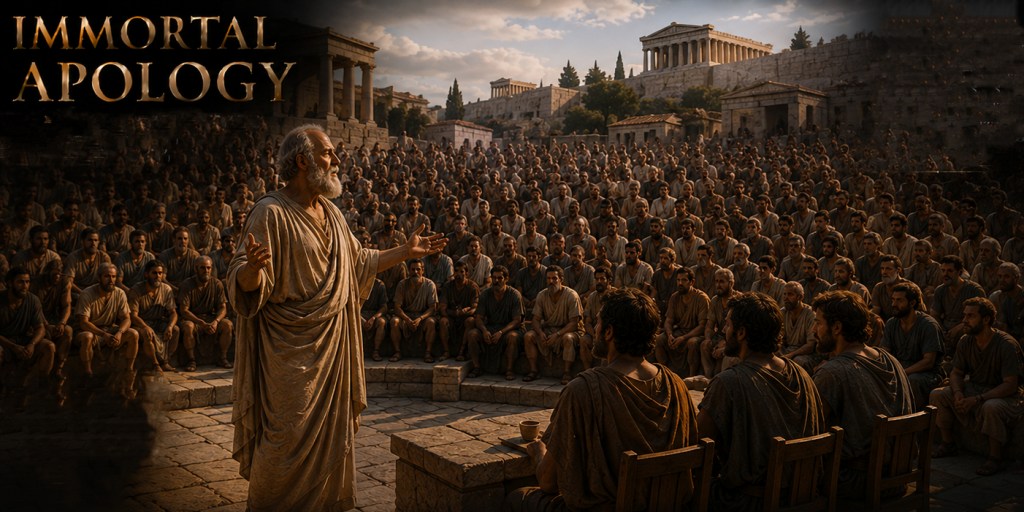
At a time when everyone is urged to choose a side, Socrates asks a more dangerous question: “Are you sure?” This movie matters today because Socrates’ final three days turn today’s biggest civic questions—truth, dissent, public outrage, institutional power, generational conflict, and personal integrity—into a tense, deeply human drama. It is not just a story about an ancient philosopher dying; it is a story about what a society does when someone refuses to say what is convenient. That is why this film belongs in theaters now: it is an ancient story that gives audiences a language for discussing the pressures of modern public life—without preaching, without reducing the issues to slogans, and without pretending that courage comes without a cost. The most powerful contemporary relevance is that Socrates was condemned not by a distant dictator but through Athens’ own democratic legal system. He was tried by fellow citizens on charges including impiety and “corrupting the young,” charges with clear political implications in a city still scarred by conflict and instability.
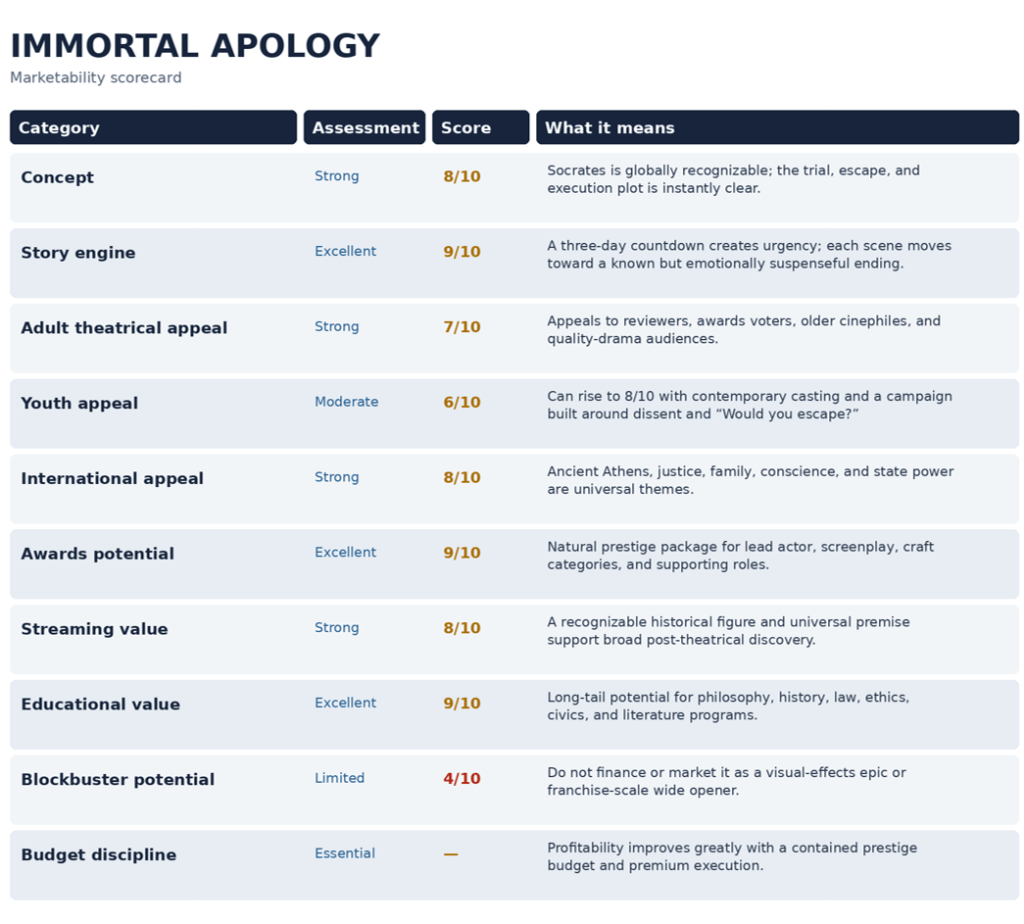
Marketability score board
Honors & Accolades
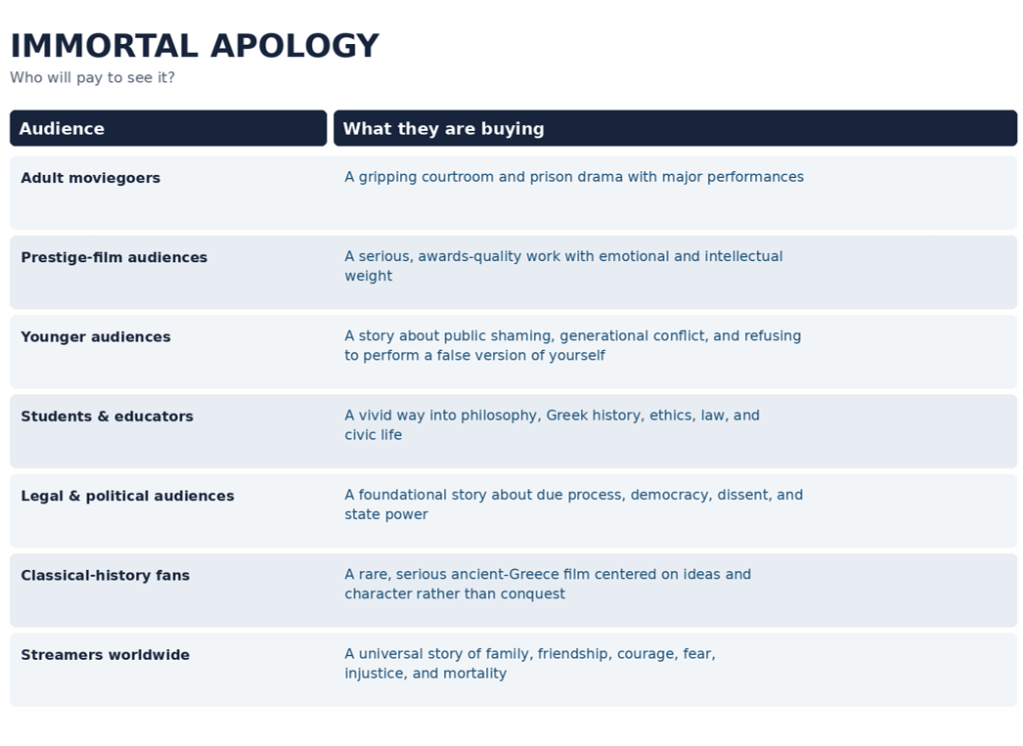
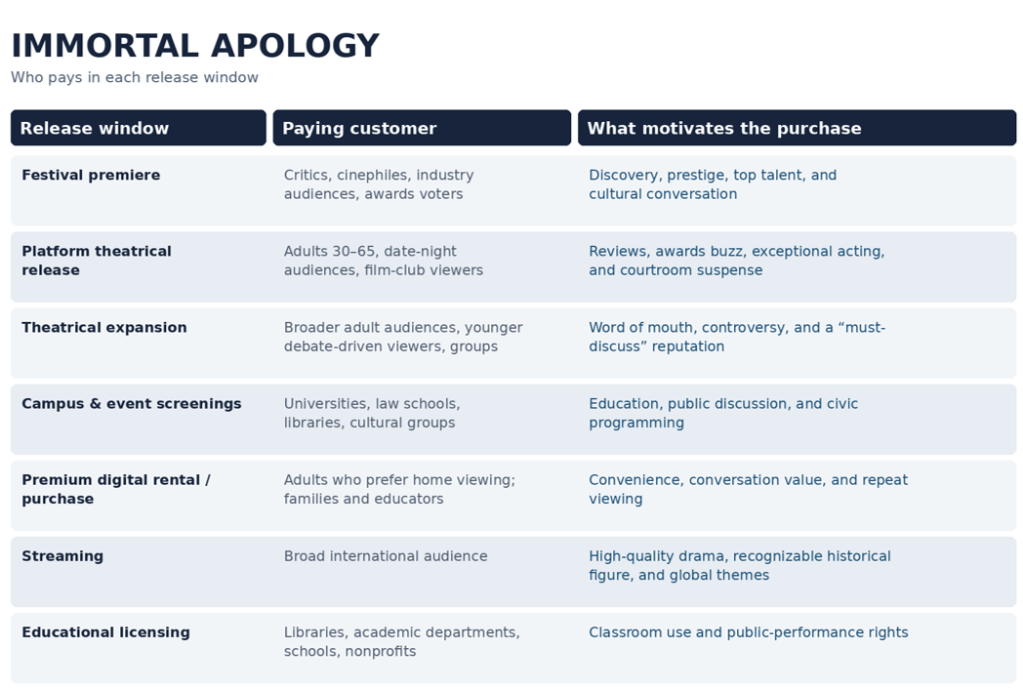
Who will pay to see this film?
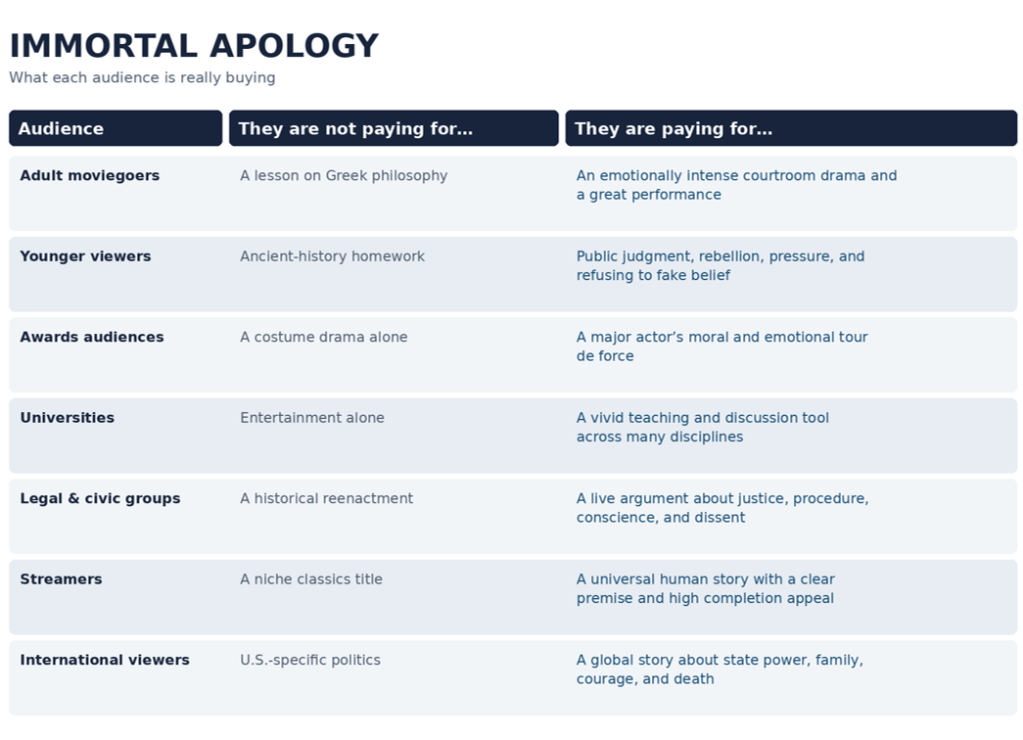
The people most likely to pay for “IMMORTAL APOLOGY” are not one narrow “philosophy audience.” They are several overlapping buyer groups: adult prestige-film audiences, younger viewers drawn to a tense story about public judgment and defiance, and institutions that can buy or license the film for education and events. The commercial key is to sell it as a courtroom-and-prison thriller about a man offered an escape from death, not as a lesson in ancient philosophy.
The best answer is: multiple audiences will pay for different reasons.
What each audience is really buying
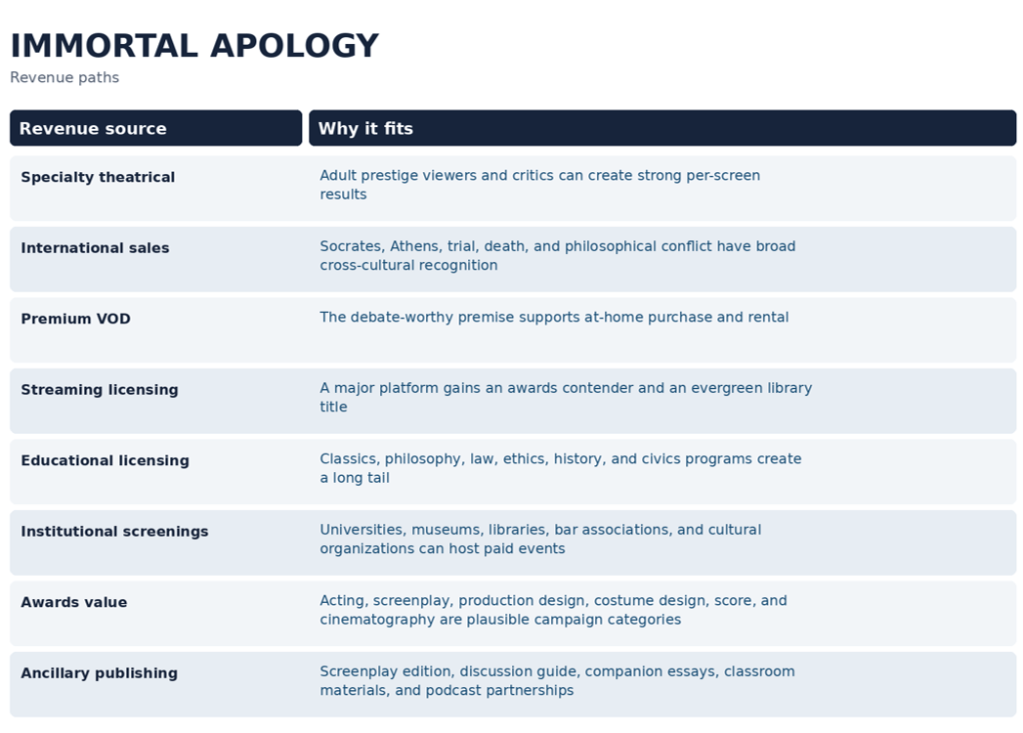
Revenue Paths
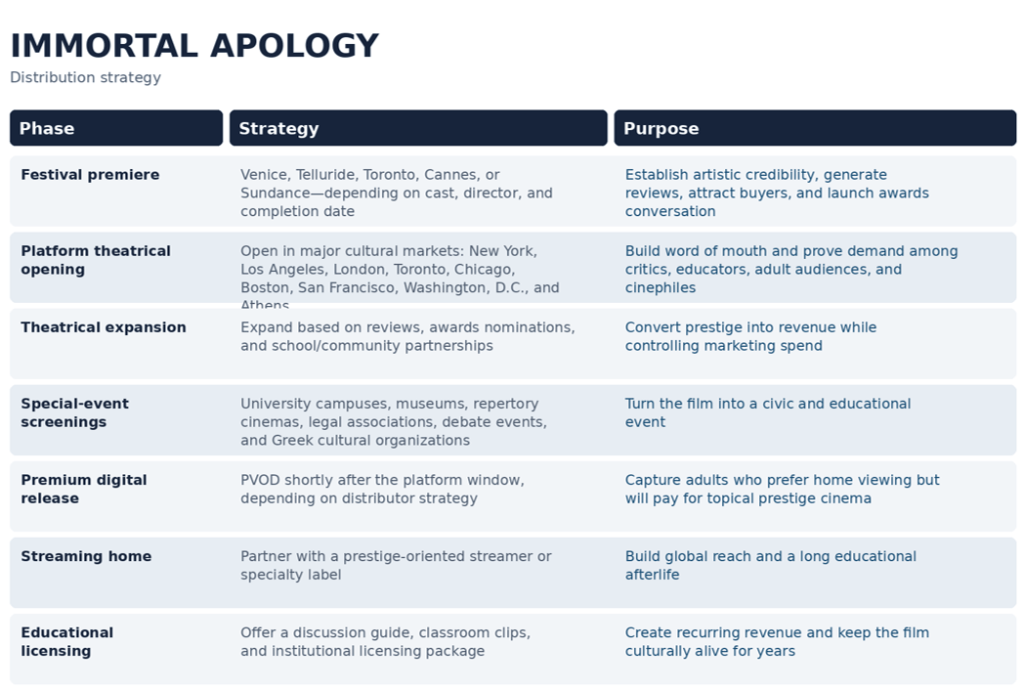
Distribution strategy
The strongest path is a prestige theatrical-to-streaming release, not a large, effects-driven wide opening.